Two years ago this week, I lost my mother to cancer.
She was just shy of 63.
When I had to tell my daughters their grandma died, I was so grateful we'd already talked about death. They had a foundation. They understood what "died" meant. They knew bodies stop working. They knew it was OK to be sad.
It was still incredibly hard navigating those conversations while drowning in my own grief, and trying to hold space for their questions while my heart was breaking. Yet, I'm so glad I didn't have to explain the concept of death for the first time in the middle of that pain.
When grief hits your house, you can't dodge the hard questions anymore. You can't delay the conversation for "when they're older." Death is right there in front of you, and your kids are watching how you handle it.
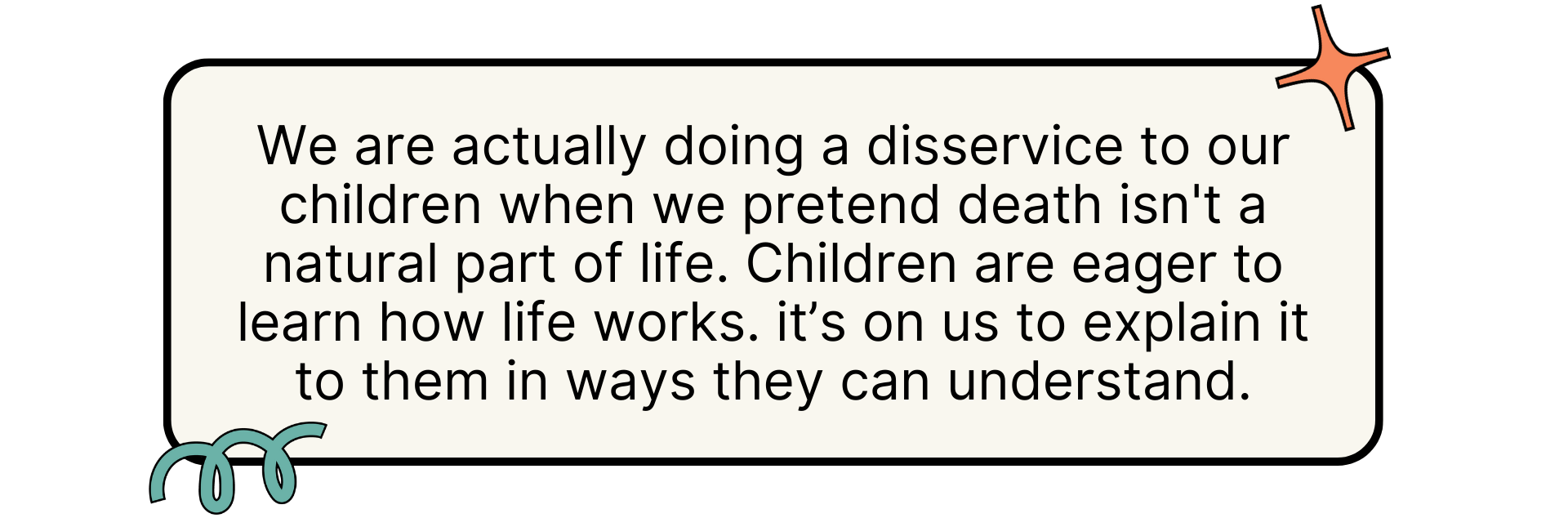
I believe one of our sacred responsibilities is helping our children understand that life comes to an end. I know in these moments we want to hide the truth and protect our children. We don’t want to shatter their innocence or cause them pain.
Here’s what I want you to know, though:
After reading this issue, you'll learn:
- The exact words to use (and avoid) when explaining death to young children at different ages
- How to answer the hardest questions like ****"Are we all going to die?", "Will you die before me?" and "Is the dead bird hurting?"
- Why your child keeps asking the same question over and over (and what they really need from you)
- How children's understanding of death changes from 1 to 10 years old
- Scripts for the most common scenarios including the death of a pet or grandparent
Let’s dive in.