It was a typical morning, getting my two daughters ready for school. I had just finished my 7-year-old's hair and was transitioning to my 6-year-old's turn.
That's when it happened – my younger daughter angrily shouted "MOVE!" at her sister, using her body to physically push her out of the way.
"How dare she?!" my mind raced. "Why is she acting like this?"
Between the eye-rolling earlier that morning and now this aggressive behavior toward her sister, my patience had run completely thin.
This wasn't new – we'd been dealing with increasing sassiness and defiance since she started first grade. As a mom, I felt that fierce protective instinct rise up: "I'm not letting her get away with this!"
I immediately prompted her to "redo" the moment – something we often practice – but my tone was angry and demanding.
She complied and said, "Excuse me..." instead.
My older daughter stepped away to eat breakfast, and that's when I fell into full lecture mode.
"I won't let you talk to anyone like that! If someone was talking to you like that, I would correct them too! Do you go to school and roll your eyes at the teacher or tell people to 'MOVE!'? This is not healthy and I won't stand for it!"
I continued venting until I noticed something shift.
Her head dropped, her whole demeanor changed, and she stopped responding.
I tried smoothing things over with a softer voice – "Can we get back on track?" – but she wasn't having it.
Her body language told me everything: I had taken things too far.
I wasn't teaching anymore; I was venting and lecturing.
That's when I made a choice that would transform the entire interaction.
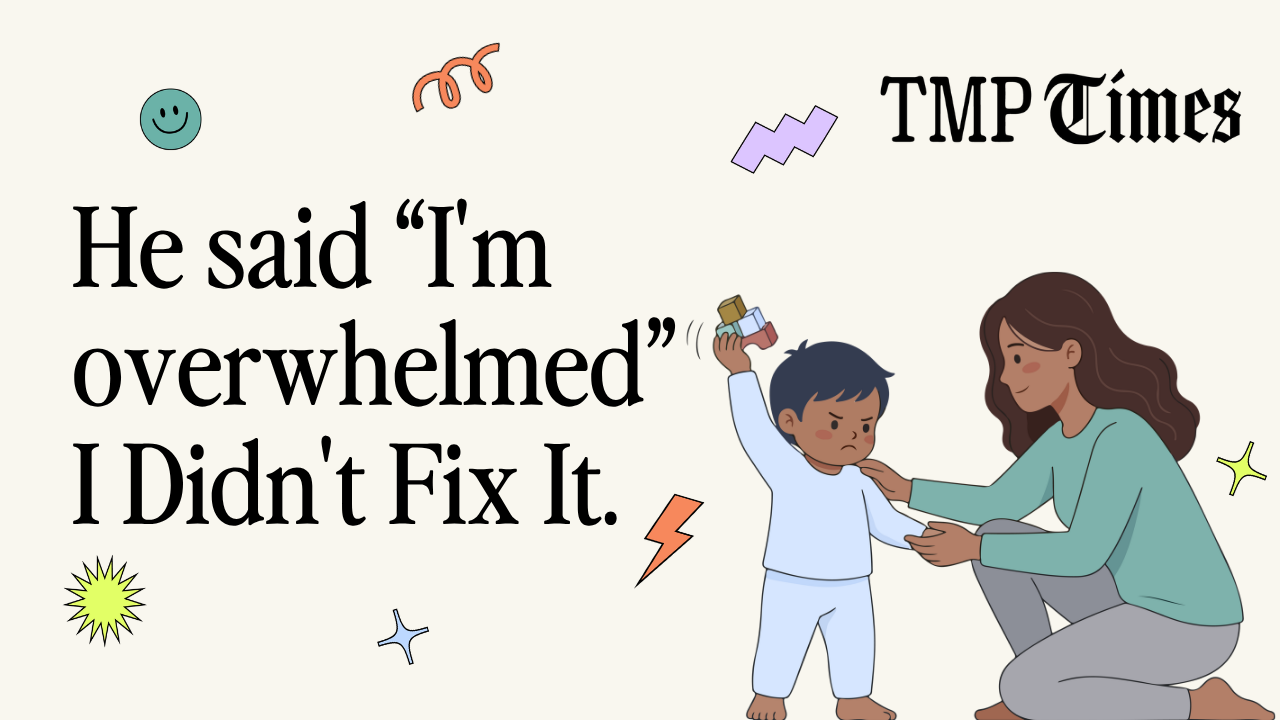
After finishing her hair, I got down on my knees to meet her at eye level.
The shift was immediate – creating an intimacy that softened her completely. She even smiled as I got down to her level, and I felt that first wave of relief. I made a few silly jokes about my morning breath to lighten the mood further.
Then I spoke from my heart: "I feel scared when you treat your sister that way and tell her 'MOVE!'"
I challenged myself to add the "because" – "I feel scared because I don't want your sister to think it's okay for people to talk to her that way, and I don't want you two to have a bad relationship. I want you to have a good relationship and treat each other well."
"I'm sorry for the way I communicated that to you. I should have used 'I' statements and shared how I felt. I was too harsh, and the way I talked wasn't helpful. It hurt your feelings…How did it make you feel?"
"Sad," she said quietly, starting to cry.
I hugged her, and we sat in silence for several moments.
That's when it hit me – my original goal to "teach her a lesson" and "take a stand" was completely lost because it was faulty to begin with. Yes, I want to teach my children the importance of speaking kindly to each other and how to communicate in healthy ways, but I can't teach that lesson if I'm not embodying it myself.

The real lesson that morning wasn't about correcting behavior – it was about repair and vulnerability, about reframing mistakes as opportunities for growth.
I could have easily fallen into shame:
“I'm the worst. I’m such a bad mom.”
“I'm a psychologist. I should know better.”
“I'm messing up my child and our relationship.”
But then I remembered something crucial – I'm always teaching my kids that mistakes are how we learn. Usually, it's about things like tying shoes or drawing. But this applies to relationships, too.

Towards the end of our conversation, I shared with her, "You know, we all make mistakes in how we speak to others. Mistakes are how we – what?"
"Learn," she said.
"That's right. The mistakes we're making are teaching us how to communicate our feelings. It's showing us what we need to work on together. You teach me so much. Thank you for being one of my biggest teachers."
She smiled. We hugged. We moved on. We had a wonderful rest of our morning, and she gave me the biggest hug and kiss before school. That moment felt good – I knew we had repaired whatever rupture had happened.
THIS is parenting.
None of this is supposed to look perfect.
It's supposed to feel messy and uncomfortable – this is a sign of learning.
Our "problem" child is here to teach us life’s biggest lessons (if we're ready and willing to learn):
- How to look within
- How to communicate our feelings and needs
- How to mend relationships
- How to accept ourself when we make mistakes in relationships
- How to offer compassion to others when they make mistakes, too
- How to be vulnerable
- How to slow down and practice patience
- How to let go of ego and unrealistic expectations of needing to be "all knowing" and "perfect" as parents
- How to listen
- How to accept the messy parts of relationships
- How to forgive
- How to be human
We "win" at parenting when we start to see our mistakes as lessons, as opportunities for growth, as teachers here to help us grow. We win when we're open to learning as much as we're eager to impart wisdom onto our kids.
That uncomfortable feeling you have? That's growth. That tinge of "Ugh, I messed up again?" That's you learning something new – if you're open to what your children are teaching you.

And you know what?
Growth looks good on us. 🪴😉

After sharing my story, I want to give you practical tools you can use in your own parenting journey.
In this following sections, I’ll share:
- Step by Step how to repair with our children
- Reflection questions for continued growth and self-discovery
- Mantras for difficult moments
- FAQs like how to repair with toddlers and preverbal children
- Your action step for this week
[🔓 Not a premium member yet? Start your free 7-day trial now. ⤵]