It was a normal weekday night.
Pajamas on, bedtime stories stacked by the nightstand, the hum of a tired family just trying to get everyone to sleep.
In the middle of the bedtime rush, a 4.5-year-old little girl got silly with her younger brother. She crossed a boundary, grabbing a toy from his hands. Her father, already worn thin from a long day, raised his voice, louder than usual, and hurried her into bed.
Later, as the lights dimmed and the house quieted, she whispered into her mom’s shoulder:
"I'm sad Daddy yelled at me."
It was a tender, raw moment, a child offering her heart before drifting off to sleep.
But in the tension of the moment, her mother, feeling the weight of the day herself, went straight into explanation:
"Daddy didn’t mean to yell. He just didn’t want you grabbing toys from your brother."
And just like that, the connection closed.
The little girl rolled away, pulling the covers over her head.
The opportunity for deeper understanding slipped by.
Because what she needed wasn’t logic.
She needed to feel seen.
Most of us have been there.
When our child shows us their vulnerable side, it can feel uncomfortable. Messy.
We rush to explain, rationalize, or “teach”, not realizing that in those moments, the greatest teaching comes from how we listen.
In this newsletter, you’re going to learn:
- How to respond when your child shares sadness, anger, or fear without shutting them down or overexplaining
- The hidden reasons behind aggressive or emotional behavior (and how to decode the real need underneath)
- Why connection, not correction, creates lasting change in your child’s behavior
- The common parenting trap that unintentionally fuels aggression and disconnection and how to avoid it
- Scripts, mindsets, and simple shifts that will help you raise emotionally healthy, resilient kids (even when the day feels messy)
Because when you can recognize that moment of “I’m sad” for what it really is (an invitation) you change not just the moment.
You change the relationship

The Big Truth
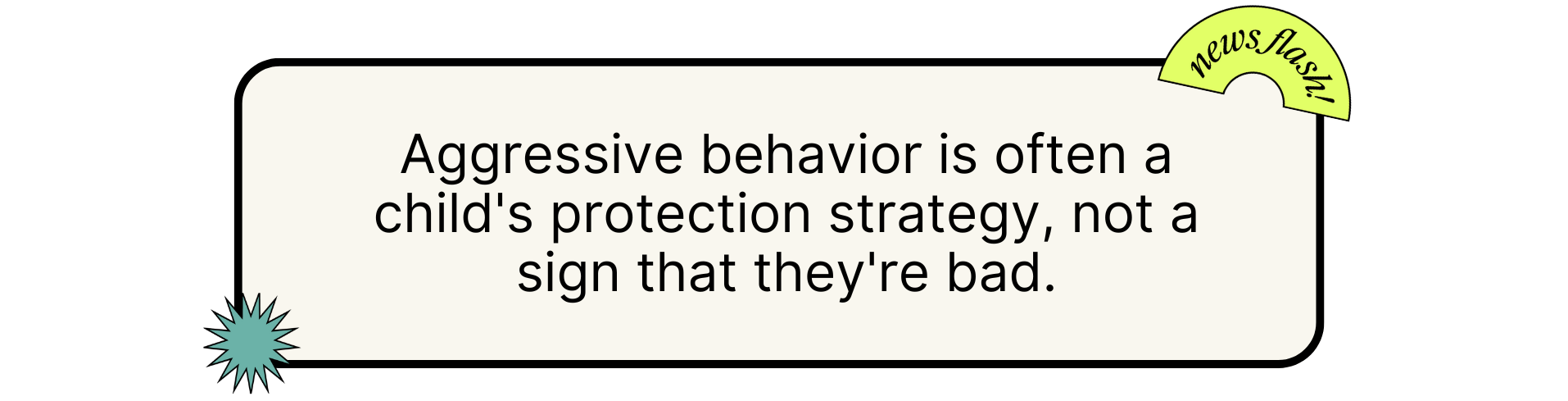
When children lash out, it’s usually not because they’re cruel.
It’s because they feel unsafe, unseen, overwhelmed, or disconnected and they don't yet have the tools to say:
- "I'm scared."
- "I feel hurt."
- "I don't know how to say what I need."
Their behavior is the external signal of an internal struggle.
And here's the hard truth: When we respond with force, shame, or dismissal, it reinforces the very fear that caused the aggression in the first place.
What Was Happening Beneath the Surface
This little girl had already received painful messages in her young life.
She had been expelled from two daycares - sent away not just for what she did, but for how she felt. Her anger. Her bigness. Her inability to regulate yet.
The message had sunk in:
"You’re bad. You can’t stay here."
So when her father, exhausted and frustrated, hurried her to bed, that old wound reopened.
She wasn’t just reacting to the immediate moment.
She was reliving a deeper fear:
- I’m bad.
- I’m not wanted.
- I can't stay.
When she whispered, "I'm sad Daddy yelled at me," she wasn't making an excuse.
She was asking for reassurance:
- "Am I still good?"
- "Am I still safe with you?"