Picture this: It's a sunny Tuesday afternoon, and Sarah, a mom of two, is trying to get her 4-year-old son, Adrian, ready for his swimming lesson.
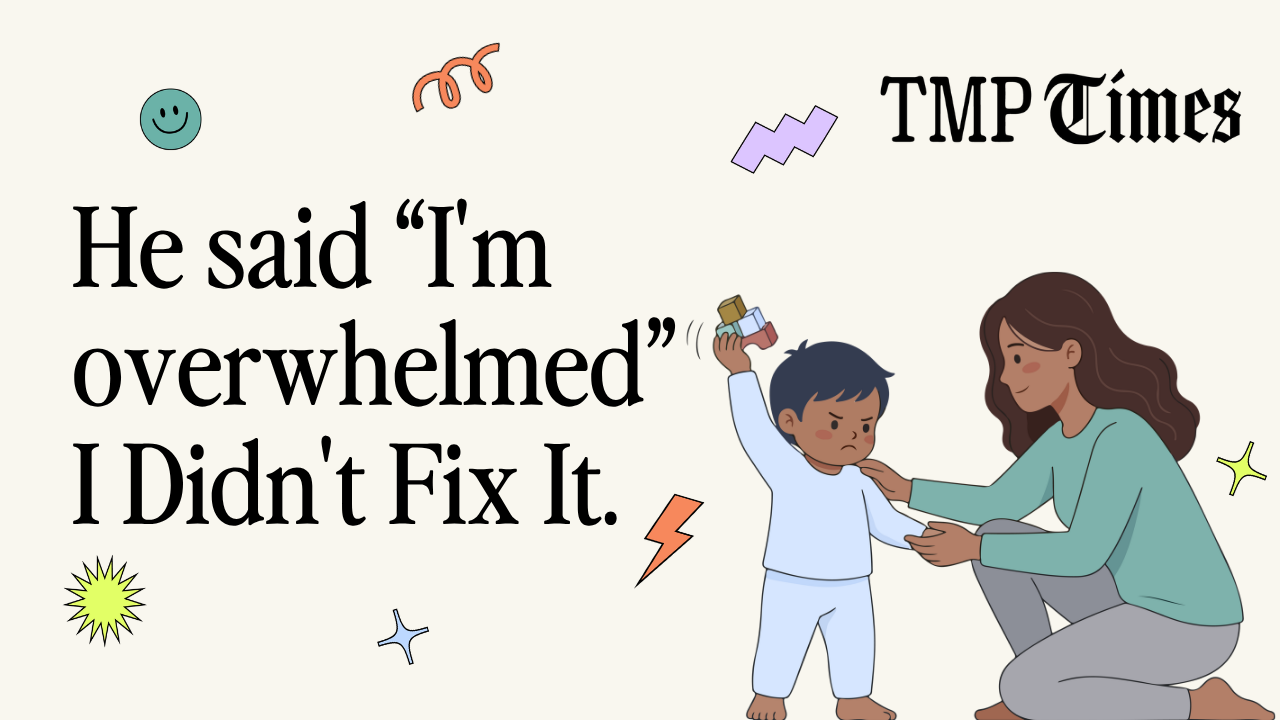
As she reaches for his swim trunks, Adrian's face scrunches up, and he shouts, "No! I don't want to go!"
Sarah feels her heart rate quicken as she realizes they're running late.
She takes a deep breath and says calmly, "Adrian, we need to get ready now." But Adrian isn't having it. He crosses his arms, stomps his foot, and yells even louder, "NO! I'm not going!"
Sarah feels her frustration rising. She's tired of the constant battles, the defiance, the feeling that every simple request turns into a power struggle. In that moment, she wants nothing more than to yell back, to force Adrian into his swim trunks, to just make him listen.
But something stops her.
Instead, Sarah kneels down to Adrian's level and says, "You seem really upset about swimming today. Can you tell me why?"
Adrian stares at her, “NO!”
But she persists, “Ok… I’m here to listen when you’re ready.”
After a few moments, Adrian looks up to her and says, “I don’t like the deep end.”
In that moment, Sarah realized that Adrian's defiance wasn't about disobedience or making her life difficult.
It was about fear.
And with that realization, everything changed.
...
I get it. I really do.
When our kids refuse to cooperate, it can feel like a personal attack on our authority.
But here's the thing - it's not about us.
It's about them and what they're experiencing.
Behavior, no matter how frustrating, is always a form of communication.
When we learn to listen beyond the "No," we unlock a world of understanding and cooperation.
In this email, we're going to dive into:
- Why your child's "no" isn't a reflection of your parenting
- The secret language behind defiance (hint: it's not what you think)
- How to turn battles into bonding moments
- Real-life strategies that actually work (no magic wands, just practical tools
- This week's printable: "10 phrases to turn defiance into cooperation"

The "Why" Behind the "No"
Let's start by busting a big myth: Your child isn't trying to make your life difficult. I know it feels that way sometimes, but stick with me here.
When your little one says "no," they're actually saying:
- "I need some control in my life."
- "I'm feeling overwhelmed."
- "I have big feelings and I don't know how to handle them."
- "I'm trying to figure out who I am."
Sounds familiar? That's because we adults feel these things too! The difference is, we've (hopefully) learned better ways to express them.

Understanding these factors can help you approach defiant moments with more patience and empathy.

Common Mistakes to Avoid
We've all been there – tired, frustrated, and at our wit's end.
In these moments, it's easy to fall into traps that can make defiance worse:
-
Reacting with anger or frustration. When we erupt in anger, we teach our kids that big emotions should be met with more big emotions.
-
Giving in to avoid conflict. Sometimes, it feels easier to just give up. But this teaches our kids that "no" is a magic word to get what they want.
-
Using threats or punishments. "If you don't... then..." might work in the short term, but it damages trust and connection.
-
Failing to acknowledge your child's feelings. When we ignore our child's emotions, we miss a chance to teach them how to handle those feelings.
Note: This doesn’t mean we need to be 100% attentive to their big feelings (that would be impossible). Just a gentle reminder to try your best to acknowledge the feelings behind the behavior as much as you can.
-
Avoid giving negative attention. Saying "no, don't, stop" often reinforces the behavior we're trying to change.
Now, let's get into the nitty-gritty of how to handle these defiant moments.