I just lived through this last week with my 2-year-old son.
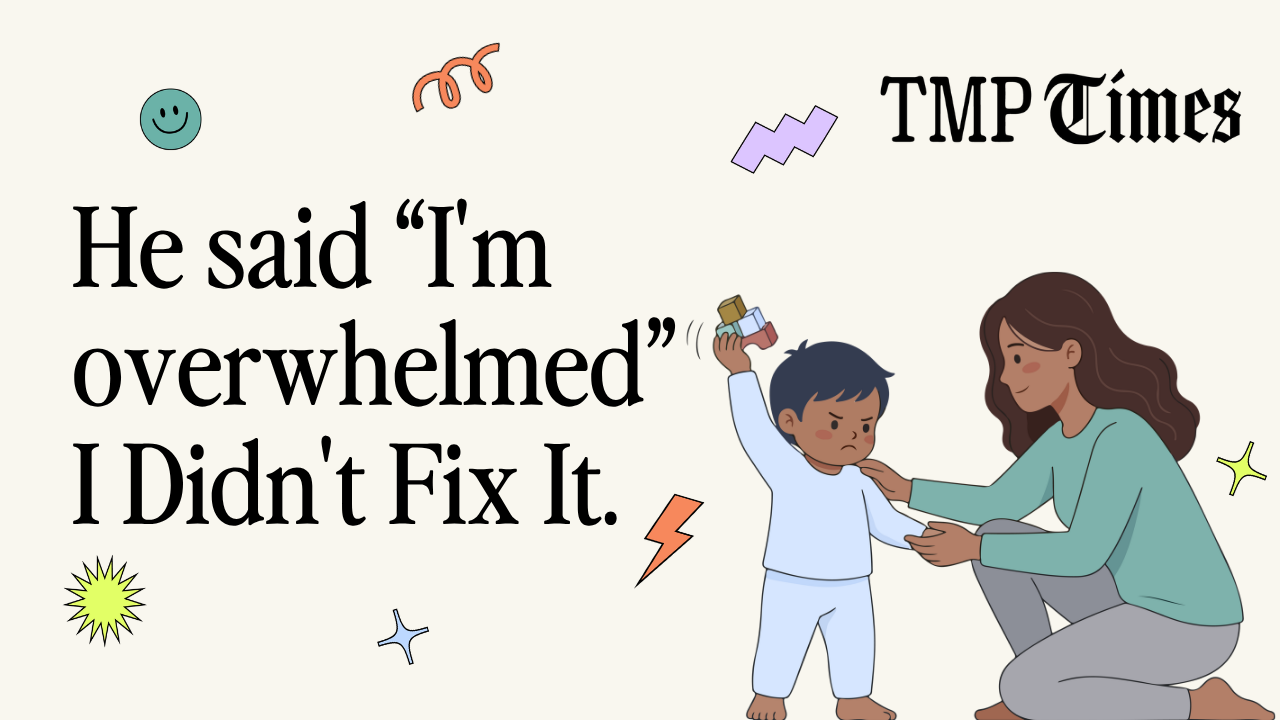
We were at the end of our bedtime routine, already past the point of exhaustion, and he melted down over stickers. Not because the stickers mattered, but because his little brain was maxed out and had nothing left to give. When I finally set the boundary and put the book away, he lost it.
For the next 5-10 minutes (honestly, it felt like an hour), he flailed on the floor. He screamed. He tried to kick me. He tried to hit me. And I had to sit in a chair and just... wait for the storm to pass.
I'm telling you this because if your 2, 3, or 4-year-old is hitting you multiple times a day, you are not alone. This is not a reflection of your parenting. And your child is not "bad."
What's happening is developmental. And with the right approach, one that focuses on teaching skills instead of punishing behavior, I promise you it gets better.
This is Part 1 of a 2-part series on toddler hitting. Today, I'm going to help you understand what's really happening when your child hits and give you the exact scripts to use in the moment so you can handle the next hitting incident differently TODAY.
Next week in Part 2, I'll share the long-term strategy including the daily teaching curriculum that actually reduces hitting over time, realistic timelines for seeing progress, and when to know if you need additional support.
First, let's tackle what to do right now when those little hands make contact.
In this newsletter, you'll learn:
- How to identify the two types of hitting so you know exactly which script to use in the moment
- The exact words to say for attention-seeking hitting (so your child learns what to say instead)
- How to handle dysregulated hitting without trying to stop the feelings or control the storm
- Why most consequences backfire for this age group (and what actually works instead)
- How to manage your own shame so you can stay regulated when it happens in public or at school