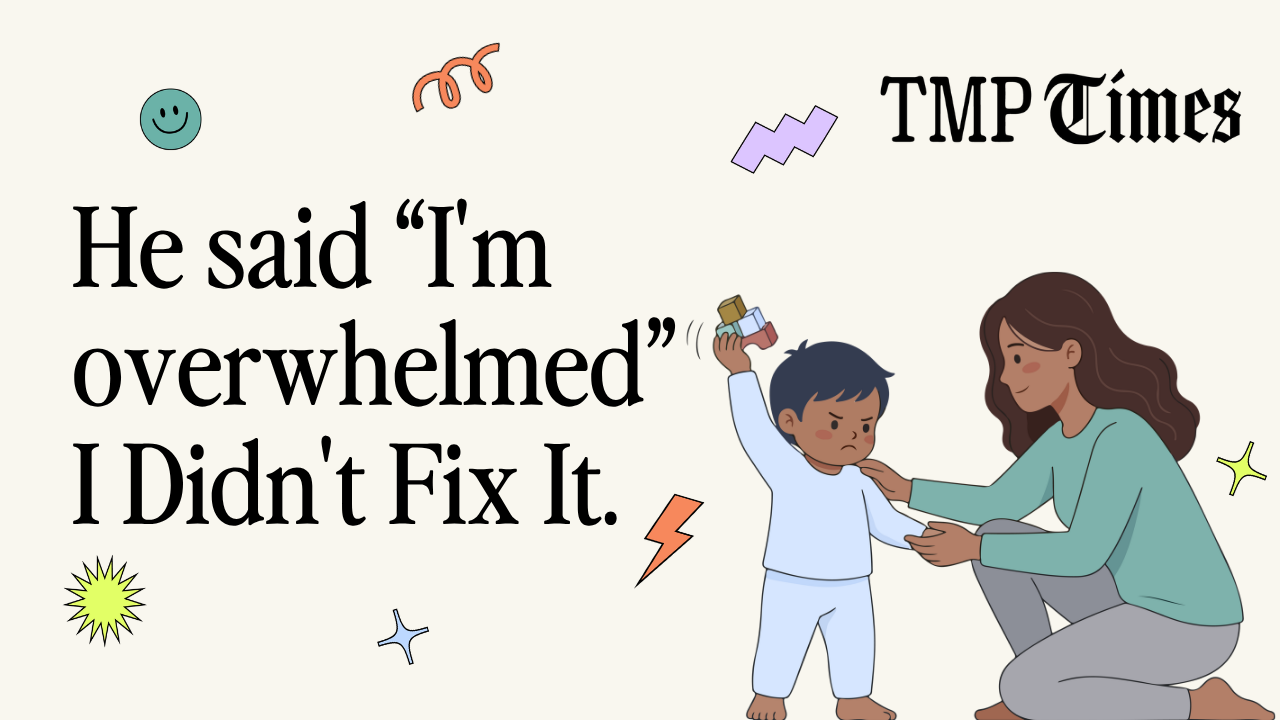
Two years ago, I sat on my bathroom floor and cried.
It was 7:43 AM. School drop-off was at 8:00. My 4-year-old daughter was still in pajamas, refusing to brush her teeth, and had just thrown her socks across the room in protest. My carefully planned morning routine was failing spectacularly.
In that moment of defeat, I wondered what was wrong with me. Why couldn't I get this basic parenting task right? Why did other families seem to glide through mornings while ours dissolved into tears and tantrums (from both of us) before breakfast was even cleared?
What I didn't realize then, but understand clearly now, is that morning routines are about far more than efficient schedules and clever charts.
This month in my coaching calls, I've spoken with multiple parents facing this exact struggle.
Sherry described her 4-year-old son's daily morning resistance: "He would say, 'I don't want to,' then he would scream saying, 'no,' so loud that it's like a good morning to our neighborhood."
Another mom shared how her daughter turns simple requests like brushing teeth into hour-long power struggles that leave everyone exhausted before the day has even begun.
These stories resonated deeply with me because I've lived them. What transformed our mornings wasn't a stricter schedule or more elaborate reward system—it was a complete reconceptualization of what mornings mean to young children and how their developing brains process transitions.
When we understand that our children aren’t being deliberately difficult but genuinely struggling with the neurological demands of the morning transition, everything changes. We then begin to develop an approach that works with their developmental needs rather than against them.
Today, I'm sharing the science-backed strategies that have helped hundreds of families in my practice transform their morning battles into moments of connection. These aren't quick fixes, but rather foundational shifts that honor both your need for timely departures and your child's developmental realities.
In this week's newsletter you'll learn:
- How to transform chaotic, stressful mornings into peaceful connections with your child - ending the daily power struggles that leave everyone exhausted
- The surprising science behind why traditional morning routines often fail, and how understanding your child's neurological state can lead to smoother transitions
- Practical, age-specific strategies that work with (not against) your child's development, helping you establish routines that actually stick
- Expert scripts and responses that turn resistance into cooperation, making mornings more enjoyable for the whole family
By implementing these evidence-based approaches, you'll not only get out the door on time but also start each day with a stronger parent-child bond and calmer emotional state that carries through the entire day.

THIS WEEK'S TEACHING
Why Mornings Trigger More Resistance
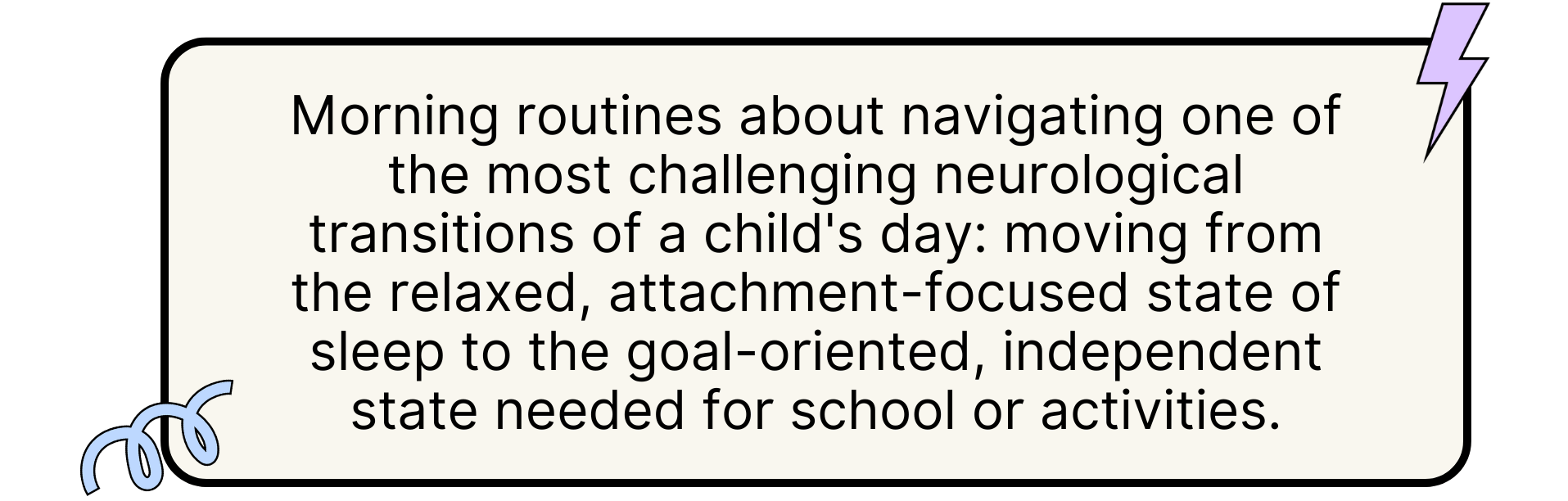
Morning resistance isn’t about laziness or defiance. It’s often a reflection of a child’s neurological and emotional state after waking.

This shift is especially hard for young children whose brains are still developing the skills needed for self-regulation, sequencing, and flexibility.
Research shows that executive functioning skills, which include task initiation, focus, and emotional control, are among the slowest to mature in early childhood. These skills rely on the prefrontal cortex, which is still developing well into adolescence.
What does this mean for mornings?
- Transitions are harder because your child’s brain isn’t fully “online” yet.
- They may feel dysregulated by sensory input (bright lights, clothing, sounds) or time pressure.
- Requests that seem simple to us—get dressed, brush your teeth, pack your bag—require layered cognitive steps that can overwhelm a waking brain.
Understanding this helps us reframe morning challenges not as battles to win, but as moments that need co-regulation, predictability, and connection.
Instead of seeing resistance as misbehavior, we can recognize it as a sign our child needs support making the leap from rest to readiness.
Three Root Causes of Morning Routine Battles
- Developmental Mismatch: Young children need connection and emotional attunement before their executive functioning skills activate. When we jump straight to task-oriented directions, their brains simply aren't ready to comply efficiently.
- Autonomy Needs: Children ages 2-7 are in a critical developmental period for establishing autonomy. Morning routines, with their time pressure and multiple demands, often trigger resistance as children instinctively push back to assert their developing sense of self.
- Sensory Sensitivities: Many children experience heightened sensory sensitivity in the morning. Tags in clothing, toothpaste texture, water temperature, or food smells can trigger disproportionate responses that appear as behavioral issues but are actually sensory processing challenges.